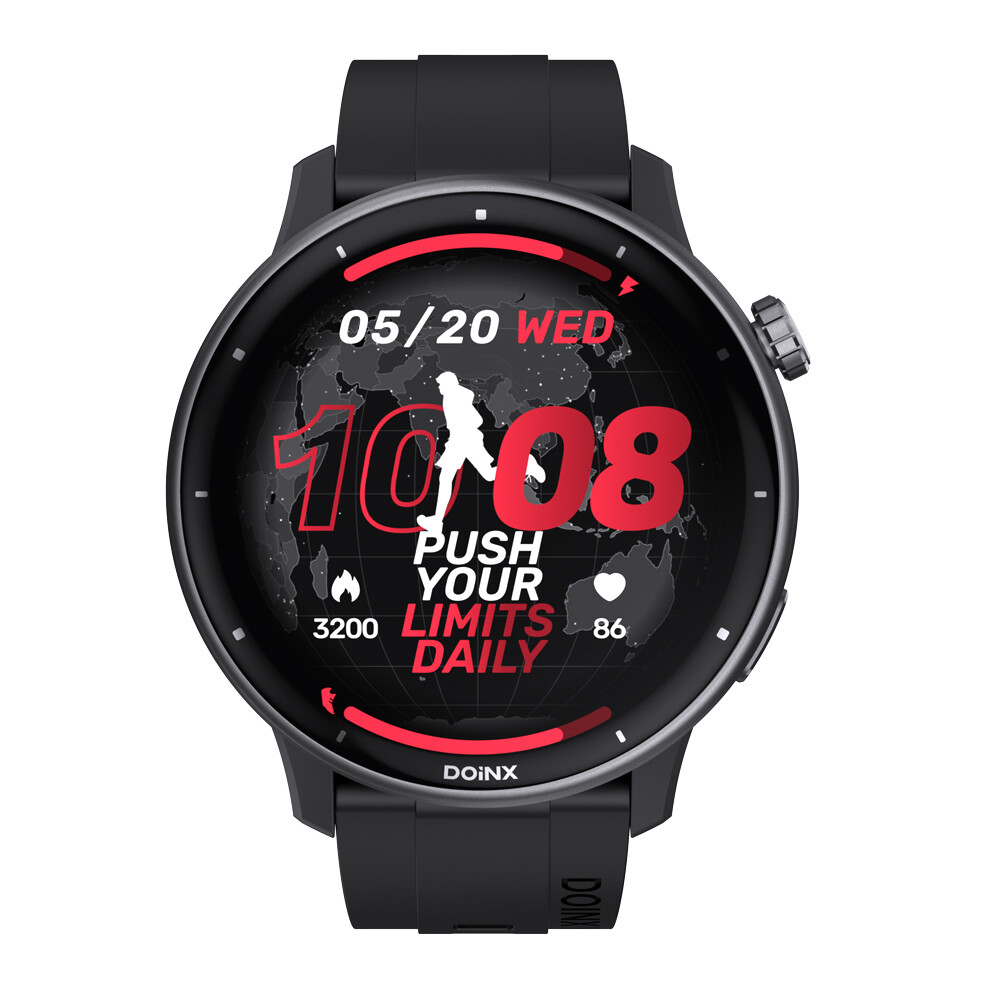
For runners choosing a watch, heart rate monitoring and GPS accuracy are two core metrics that can't be overlooked. The Duxiang ACE 2 series and ACG 2 series target different sports scenarios, each with its own strengths in these areas. This article compares them across three dimensions—sensor design, algorithm tuning, and real-world usage—to help you find the training partner that best fits your needs.
Heart Rate Monitoring: Photodetector Sensor Adaptation
Both watches use optical heart rate monitoring, estimating heart rate by shining green LEDs on the skin and detecting blood flow changes. This approach eliminates the need for a chest strap, making it convenient for daily training. The difference lies in how deeply each algorithm adapts to various workout scenarios.
During road running, stable arm swing ensures good sensor-skin contact, resulting in high-confidence optical heart rate data. In trail running, actions like brushing against branches or pushing off with knees during uphill climbs frequently interrupt continuous data collection, causing data spikes.
The ACE 2 series optimizes sampling algorithms for road running, applying more aggressive smoothing to heart rate responses between steady cruising and interval sprints to reduce data spikes caused by brief arm swing anomalies. The ACG 2 series adds a motion noise detection module at the algorithm level; when sensors detect vigorous shaking, it automatically switches to low-frequency sampling mode, trading some real-time responsiveness for overall data stability.
For runners focused on road racing and track training, the ACE 2 offers heart rate tracking that better aligns with your workout rhythm. For trail runners or those competing in ultramarathons, the ACG 2 ensures more reliable data continuity during complex movements.
GPS Trajectory Accuracy: Differences Between Chip Solutions and Antenna Design
GPS trajectory accuracy depends on three factors: the sensitivity of the positioning chip, antenna design and layout, and the strategy used for trajectory smoothing.
The positioning chip in the ACE 2 series is optimized for urban running, delivering accurate track adherence in open areas between buildings. Its antenna layout accounts for natural wrist swing during runs, maintaining a stable signal-receiving surface as your arms move back and forth.
The ACG 2 series supports multi-constellation parallel positioning, enabling faster acquisition of more satellite signals even in dense forests or mountain valleys. The antenna design features a larger reception area to accommodate varying wrist postures during off-road activities. However, multi-constellation processing increases power consumption, which is why the ACG 2 series includes a larger-capacity battery.
For trail runners who need to record GPX tracks or follow preset routes, ACG 2's multi-constellation positioning is essential. For runners primarily on roads or standard tracks, ACE 2's single-constellation accuracy is sufficient for track recording while consuming less power.
Battery Life and Data Logging: Trade-offs for Long-Distance Scenarios
Continuous GPS is the most power-intensive mode on a sports watch. For marathon or 100K ultra-runners, battery life directly determines whether the watch can record the entire race data.
The ACG 2 series features a larger battery capacity, delivering extended GPS recording time ideal for ultra-long distance events. The ACE 2 series has a smaller battery but includes power consumption optimizations for daily training; with typical usage of 3–4 runs per week at about one hour each, the charge cycle supports regular needs.
Selection criteria are straightforward: for runners covering up to 50 km per week with single sessions under an hour, the ACE 2's battery life is sufficient. For those frequently participating in full marathons or ultra-distance trail races, the ACG 2 offers ample battery reserve.
Positioning Gaps and Price Ranges
The ACE 2 series is designed for road running and track training, focusing on heart rate zone management, pace alerts, and running dynamics data analysis. It features streamlined hardware and an affordable price point. The ACG 2 series targets all-terrain sports, supporting multi-system positioning, barometric altimeter, and trail navigation. With higher hardware costs, it carries a correspondingly higher price tag.
Runners shouldn't pay for features they don't need. Decide whether you'll be running on roads or trails, then determine if you need to budget more for GPS and battery life.
Buying Guide
Choosing the right watch is about matching it to your training style. The ACE 2 series offers clear advantages in heart rate response speed and GPS track accuracy on roads, while the ACG 2 series excels in location stability and battery life during off-road conditions. Before deciding, confirm two things: whether your primary training is on-road or off-road, and if you need route navigation and elevation data. Once these are clear, the choice becomes straightforward.